×
Choosing new windows means thinking about your home’s comfort, its appearance and the way you live in it. The frame material is one of the decisions you’ll need to make: PVC and hybrid windows each have their own characteristics and can meet different priorities.
So, how do you choose between the two? Here are the main differences to consider when deciding which type of window best suits your home and your priorities.
In brief: PVC or hybrid?
- PVC is a versatile, affordable option that offers good energy efficiency thanks to the material’s insulating properties. It suits a wide range of home styles.
- Hybrid windows combine a PVC frame with exterior aluminum cladding, emphasizing durability, performance and finish options. Their structure can also be well suited to larger window sizes. An ideal option for contemporary façades with darker finishes.
- Your choice depends on your priorities in terms of budget and design, your colour preferences, the type of windows you are looking for and your desired energy performance.
- The frame material is not the only factor to consider when assessing energy performance. The glazing, product design and certified performance characteristics also play an important role.
Key takeaway : There is no one-size-fits-all choice between PVC and hybrid windows. The best product is the one that meets the needs of your project.
What Is the difference between a PVC window and a hybrid window?
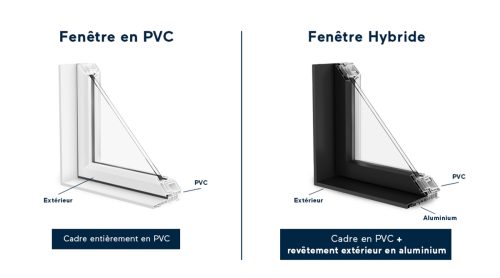
The main difference between a PVC window and a hybrid window lies in the materials used to make their frames.
A PVC window has a frame made entirely of polyvinyl chloride, a material commonly used in window manufacturing.
A hybrid window, on the other hand, combines two materials: a PVC frame and exterior aluminum cladding. It brings together the characteristics of both materials in a single product.
This distinction affects the available colour and finish options, as well as the window’s appearance on the outside of your home.
Does energy performance depend on the material?
The choice between a PVC window and a hybrid window should not be based solely on the frame material. A window’s energy performance depends on several factors, including the glazing, the product’s design and its certified performance characteristics.
Two windows made from different materials can therefore both offer appealing performance characteristics. Conversely, two windows made from the same material may offer different levels of performance depending on their configuration.
Depending on your project’s needs, various glazing options are available, including Thermal glazing option et le Tranquillity glass. Your choice may depend on your priorities: improving energy efficiency, reducing outside noise or meeting the specific needs of certain rooms.
For example, if a bedroom faces a busy street, noise reduction could be one of the criteria to discuss. In a room where thermal comfort is a priority, glazing options also deserve careful consideration.
Rather than assuming that one material necessarily performs better than the other, it is best to compare the specifications of the models you are considering. This approach will help you make an informed choice based on your priorities and the performance you want for your home.
How do you choose the right windows for your project?
To determine whether PVC or hybrid windows are best suited to your project, start by identifying your priorities. A few criteria can help guide your choice.
1. Your project budget
PVC is generally the more affordable of the two options. It can therefore be a good choice if budget is an important consideration for your project.
A hybrid window may be worth considering if you are looking for the benefits of combining materials and a different range of exterior finishes.
2. Colour and finish options
Window colour can transform the look of a façade. It can create contrast, highlight an architectural detail or help bring the home’s various elements together.
Premia PVC windows are available in white. You can also request a custom paint colour, allowing you to coordinate your windows with your home’s exterior cladding, front door or other architectural features.
Premia hybrid windows offer a choice of exterior finishes: clear anodized aluminum and four textured paint finishes; Charcoal, Black, Commercial Brown and Iron Ore. The painted finishes are textured, giving them a distinctive appearance and helping reduce the risk of scratches.
Do you like black windows? Black is a standard finish on Premia hybrid windows and is particularly well suited to their exterior aluminum cladding. With PVC, this colour requires an optional paint finish. Hybrid windows are therefore an appealing way to add character to your façade, especially by creating contrast with light-coloured cladding or highlighting the lines of contemporary architecture.
To help guide your choice, start with the elements you want to keep or highlight. If your exterior cladding already makes a strong visual statement, a more understated window colour can balance the overall look. On the other hand, if the façade is simple, dark windows can give it character.
3. Your home’s style
Windows are more than a functional feature: their colour and finish contribute to your home’s overall appearance. To choose between PVC and hybrid windows, first ask yourself what style you want to highlight.
Premia PVC windows stand out for their clean lines and their ability to complement both contemporary and traditional architecture.
For a contemporary façade, dark windows can create a striking contrast with light-coloured cladding or emphasize the lines of a more minimalist design. The textured finishes of Premia hybrid windows offer different ways to create this contrast.
For a home with a warmer feel, a brown finish can complement materials such as stone, brick or cladding in natural tones. The idea is not to match everything, but to create a visual connection between the windows and the other elements of the façade.
You can also draw inspiration from existing details: the colour of the front door, the roof, the trim or wood features. A window can blend into the overall design or, conversely, become an eye-catching accent. The key is to choose a finish that complements the architecture and the feel you want to give your home.
4. Window sizes and opening types
Window sizes influence both the appearance of your home and the amount of light entering each room. Large openings can strengthen the connection to the outdoors, while smaller windows or unusual shapes can highlight a home’s character.
Premia hybrid windows can be suitable for projects that favour large formats. PVC, for its part, also allows for rounded or irregular shapes, depending on the architectural style.
Before choosing, look at the façade as a whole: are the windows aligned? Are there any openings you would like to highlight? Does a new window need to coordinate with windows that will remain in place? These questions can help you make a choice that works both aesthetically and practically.
PVC or hybrid: The right choice is the one that meets your project’s needs
PVC windows and hybrid windows offer two ways to meet homeowners’ needs.
It can be helpful to compare windows with equivalent configurations, then look at differences in materials, finishes and options. To make the right choice, take the time to speak with a Fenplast expert advisor, who can guide you through the process and help you select the right products for your home.
Discover Premia PVC windows
Discover Premia hybrid windows
Share this post :
Recommended for you :